When Care Becomes Learning: How Wellness Counselling at DPS Kalyanpur Advances SDG 3 and SDG 4
Discover how wellness counselling at DPS Kalyanpur supports student wellbeing, mental health and quality education while advancing SDG 3 and SDG 4.
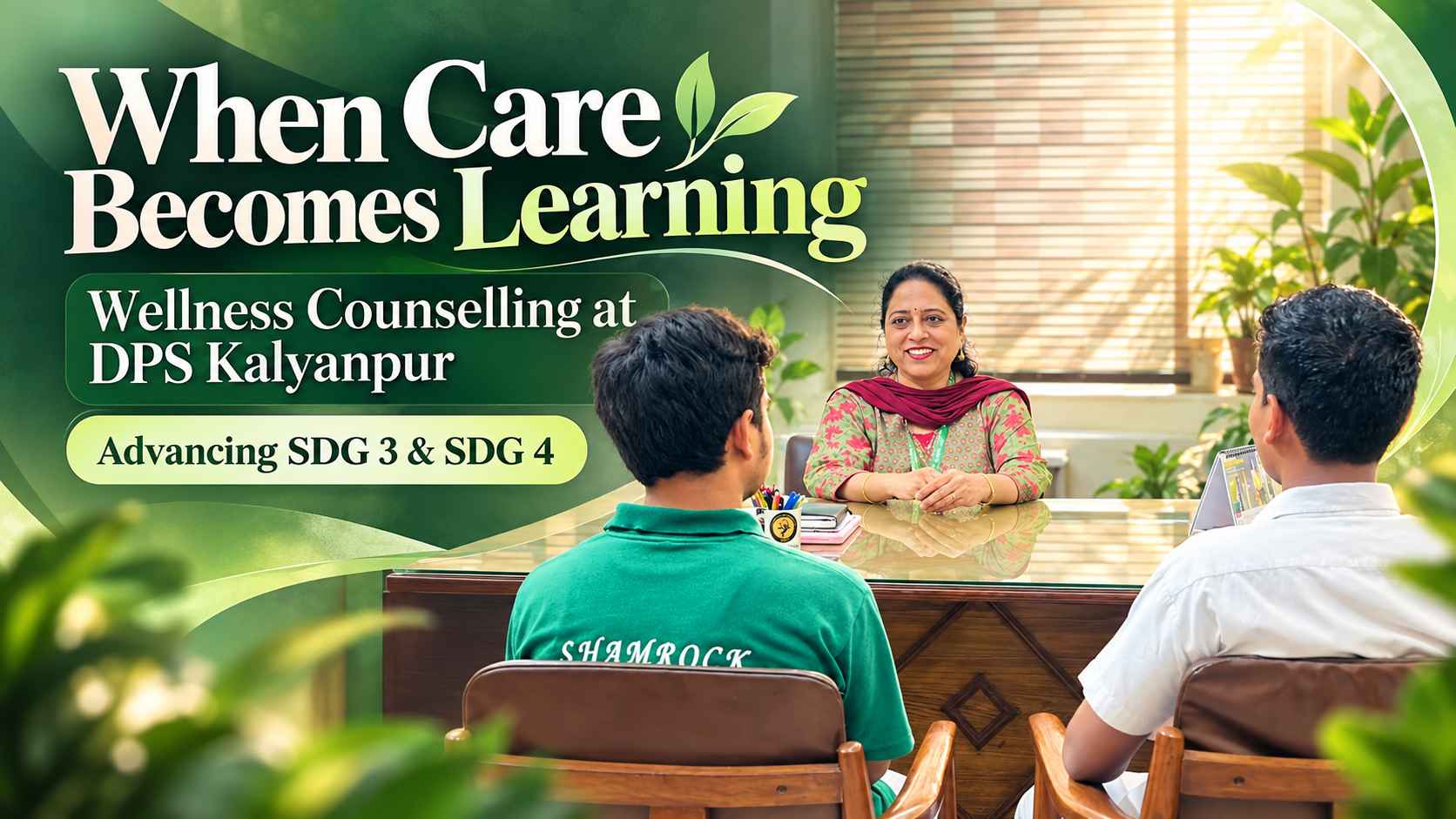
When Care Becomes Learning: How Wellness Counselling at DPS Kalyanpur Advances SDG 3 and SDG 4
At DPS Kalyanpur, the counsellor's room is part of the learning environment. Sessions help children manage anxiety, sleep fears, family tension and study pressure, while teaching emotional regulation and decision making. These skills support two UN goals, good health and quality education, because a child who feels safe and heard can focus, participate and persist. A child who lies awake worrying, or who has stopped showing drawings to their parents, is in no position to concentrate on fractions. School wellness counselling deals with that gap. At DPS Kalyanpur, our school counsellor meets students individually, works with parents and teachers and builds coping skills that last well beyond a single difficult term. This blog explains how these sessions support student mental health, teach life skills and connect to the two United Nations goals on well-being and quality education. It also walks through a real case and answers the questions parents ask most often. School wellness counselling is structured emotional support offered to students inside the school day. At DPS Kalyanpur, the counsellor runs individual sessions. With their expertise, they draw up behaviour support plans and work alongside parents and teachers. The aim is simple- to notice problems early, teach coping skills and make asking for help feel ordinary instead of embarrassing. Individual sessions give each student a one-to-one space to talk through what is weighing on them Behaviour support plans set out small, practical steps that school and home can follow together Parent-teacher collaboration keeps the adults around a child working from the same picture Many issues look minor from outside, such as settling in after a move or building a morning routine, yet they shape how a child feels about school Counselling gives students primary-level psychosocial support, which is what SDG 3.4 asks schools to provide. The WHO describes mental health as a state of well-being in which every individual realises their potential. Sessions at DPS Kalyanpur move students towards that by spotting warning signs early, teaching coping skills and supporting behaviour change. WHO and UNESCO's Global Standards for Health Promoting Schools say school health services should include psychosocial support and counselling Counselling sits at the first level of support, where a worry can be handled before it grows Sessions also reduce the stigma around asking for help, which is often the biggest barrier for a child Each conversation adds to lifelong mental wellness, even when the concern seems small Most sessions deal with ordinary problems that feel enormous to the child. A student may be anxious after relocating from abroad, a younger child may be learning to sleep alone without fear, or a teenager may be trying to balance a passion with academics. Each case gets a plan matched to that child. Anxiety after a move from abroad, where the child needs time and reassurance to settle Bedtime fear, where gradual steps help a child sleep independently Passion versus academics, where the counsellor helps a student weigh both without dropping either Morning routines, for students who need to build independence A school counsellor sees patterns that individual adults can miss. Referrals from teachers, feedback from parents and follow-up sessions show when a child's mood, behaviour or friendships change. Catching these signals early lets the school step in with coping skills and support before the difficulty spreads into learning or life at home. Teachers refer students who seem short-tempered or withdrawn Parents share what they see at home, which fills in what school cannot see Follow-up sessions show whether a plan is working or needs to change Early identification makes talking to a counsellor routine, which lowers the stigma over time SDG 4.7 links quality education to life skills and counselling is where many of those skills get practised. Students learn to manage their emotions, make responsible decisions, resolve conflicts and understand themselves. A child who feels safe and heard can concentrate in class and stay with a task when it gets difficult. When school feels meaningful instead of like a chore, a child arrives in a different frame of mind each morning. Space to share her art without worrying about comparison gives a child real confidence. Steadier emotions show up as calmer classrooms and more stable friendships. These gains form the social-emotional base that academic learning sits on. Counselling sessions at DPS Kalyanpur teach four life skills: emotional regulation, responsible decision making, conflict resolution and self-awareness. Students practise them on real situations from their own week, so the lessons feel useful instead of abstract. Over time these habits shape how a child studies and how they recover from a bad day. Social emotional learning gives children the steadiness that academics depend on. A student who is anxious, disengaged or emotionally isolated struggles to concentrate, whatever the quality of teaching. Counselling builds that steadiness first, so classroom lessons reach a child who is ready to listen and take part, even when the work gets difficult. Anxiety uses up attention a child would otherwise spend on learning Feeling heard makes it easier to ask a teacher for help A regulated child can persist through a hard chapter instead of giving up Quality education, in the SDG sense, depends on these conditions being in place for every child Earlier this term, a Class 8 student was referred for being short-tempered and pulling away from her family, even though her friendships at school were strong. Follow-up sessions traced the change to shifting family attention and frequent comparisons with an older sibling. The counselling plan then addressed those causes directly. The plan asked the family to make three simple shifts at home, each aimed at a cause found in the follow-up sessions. One restored one-to-one attention, one ended the comparisons hurting her sense of self-worth and one turned her strongest interest into a channel for connection instead of a subject for judgement. Within four weeks, her parents reported fewer temper outbursts and she shared a drawing at home voluntarily for the first time in months. Better emotional regulation and more open family communication restored her sense of being valued, which underpins a child's willingness to engage with learning. Small changes at home made a large difference. Parents and teachers are part of every plan. Teachers refer students and share classroom observations, parents report what changes at home and the counsellor combines both views into a support plan. This parent-teacher collaboration helps changes made in a session carry into daily routines, which is where they matter most. A school cannot deliver quality education to students who are anxious, disengaged or emotionally isolated. SDG 3 protects the child's well-being and SDG 4 depends on it. School wellness counselling that reaches every child equitably is where the two goals meet in an actual classroom. Neither can be met without the other. Every time a student leaves a session calmer, understood and more hopeful, the school moves a little closer to the world SDG 3 and SDG 4 describe, one where well-being and learning go hand in hand. School wellness counselling at DPS Kalyanpuris built around that idea. It treats a child's feelings as part of their education and it gives families and teachers a shared way to respond when something changes. "When a school becomes a space of care, it becomes a space of learning." Ans. School wellness counselling is emotional and behavioural support given to students inside school. A counsellor holds individual sessions, builds behaviour support plans and works with parents and teachers to help children manage anxiety, stress and relationships so they can learn. Ans. The school counsellor identifies warning signs early, teaches coping skills, supports behaviour change and involves parents and teachers. Students also learn that asking for help is normal, which reduces stigma. Ans. Wellness counselling in schools teaches emotional regulation, responsible decision making, conflict resolution and self-awareness. Students practise these on real situations, which helps them stay calm, resolve disagreements and understand their own reactions. Ans. Social emotional learning helps children feel safe, heard and regulated. A child in that state can focus in class, take part and persist through difficult work, so learning improves. Ans. Contact the counsellor when a child shows lasting changes such as anxiety, fear at bedtime, frequent temper outbursts, withdrawal from family or trouble balancing interests with academics. Early conversations make support simpler and more effective.Introduction
What is School Wellness Counselling and How Does It Work At DPS Kalyanpur?
How Does School Wellness Counselling Support Student Mental Health?
What does everyday DPS Kalyanpur mental health support look like?
How does a school counsellor spot warning signs early?
How Does Wellness Counselling In Schools Support SDG 4.7 and Quality Education?
Which life skills do counselling sessions teach?
Why does social emotional learning make academic learning possible?
What Does A Real Counselling Look Like at DPS Kalyanpur?
What were the three shifts in the counselling plan?
What changed within four weeks?
How Do Parents and Teachers Work with the School Counsellor?
Why do SDG 3 and SDG 4 Go Hand in Hand in Schools?
Conclusion
Anjana Mathur, School Wellness Counsellor, DPS KalyanpurYour Queries Answered
What is school wellness counselling?
How does a school counsellor help students at DPS Kalyanpur?
Which life skills does wellness counselling in schools teach?
How does social emotional learning help academic performance?
When should a parent contact the school counsellor?
